Articles
- Mainter
-
- 3 min reading

The concept of root cause analysis, also known as cause analysis or RCA (Root Cause Analysis), is a method used to trace the exact reason a problem occurs. The aim is to resolve the underlying issue permanently rather than applying a temporary fix.
Criteria for when to perform an analysis
It’s not justified to start a deep root cause analysis for every minor fault, since a small incident that’s quickly resolved rarely needs detailed investigation. Instead, define clear thresholds for when an investigation should begin. Common guidelines in industry are to activate the process when a fault recurs a certain number of times, when an unplanned stoppage exceeds a time limit, if repair costs are high, or if the event poses a safety risk.
How to conduct the analysis step-by-step
A successful root cause analysis is built on a structured process and is usually divided into four clear steps:
- Identify the problem: Define what happened and the consequences of the fault.
- Collect data: Gather facts about the event, from machine data and history to operator observations.
- Analyze the cause: Use proven methods to dig deeper and find the true origin of the fault.
- Implement fixes and follow up: Carry out a permanent solution and evaluate the result afterwards to prevent recurrence.
Proven methods
There are several methods for root cause analysis that are adapted to the scope of the fault. In some cases it helps to map the problem visually, for example with a fishbone diagram, while other situations require a logical chain of questioning.

Root cause analysis — 5 Whys
Problem: The conveyor belt suddenly stops.
- Why? A fuse has tripped in the electrical cabinet.
- Why? The drive motor overheated.
- Why? A bearing in the motor had seized.
- Why? The bearing had not been lubricated according to the service plan.
- Why? The lubricator pump was broken and staff had failed to create a fault report.
The solution in this case is not simply to replace the fuse and restart the belt. The true corrective action is to replace the defective lubricator pump and review procedures for reporting deviations in the system.
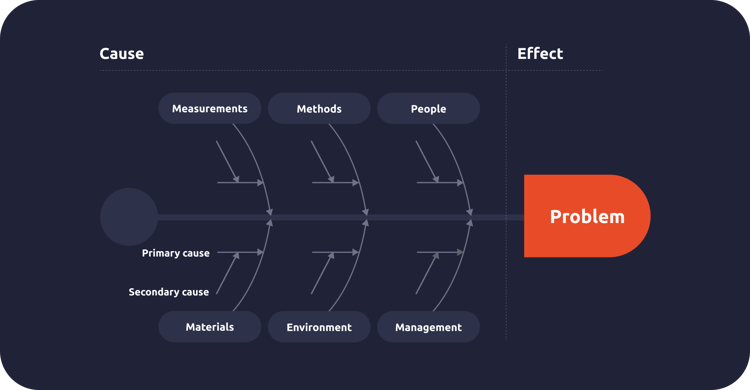
Fishbone diagram (Ishikawa)
A fishbone diagram is suitable for more complex faults as it creates a clear map of all factors that may have contributed to the problem. You draw a visual diagram that resembles a fishbone, placing the main problem at the head and sorting possible causes into categories along the bones: for example method, material and environment.
Avancerad rotorsaksanalys
The fishbone diagram is a useful model but should not be seen as a universal solution for all problems. The tool works best in advanced root cause analysis when combined with methods such as brainstorming and the 5 Whys:
-
Brainstorming: Compile possible causes for why the problem occurred.
-
Fishbone diagram: Place causes in a fishbone diagram and look for connections. Remember that a specific cause is often a consequence of another event.
-
Multi-vote: Filter and select the theory deemed most likely.
-
5 Whys: Test whether the theory holds in practice and to find the core problem. Update and expand the fishbone diagram with new sub-levels as you go.
-
Brainstorming: Collect proposals for permanent fixes
-
Multi-vote: Choose the actions expected to give the best results quickly and at the lowest cost.
- Follow-up: Verify afterwards that the solution had the intended effect.
Example of root cause analysis
Consider a fictional scenario from the steel industry to see how the method works in a larger context. A steel mill experienced recurring downtime on a critical overhead crane. Technicians initially replaced overheated relays, which fixed the problem temporarily. After starting a structured investigation, it emerged that fine metal dust from the facility had entered the electrical cabinet and caused short circuits. The permanent solution was to install dust-tight cabinets and add a new item to the service plan for regular cleaning.
The right tool for maintenance
A digital maintenance system (CMMS) acts as a root cause analysis tool for the whole department. Because the platform already stores data such as machine history and fault reports, you have a ready-made basis when you need it. The system helps staff keep information consolidated in one place and contributes to creating a safe, well-functioning workflow.
Standardize the work with a root cause analysis template
You can build a predefined root cause analysis template into your maintenance system to create a uniform way of working. Your employees get a clear checklist to follow when problems occur and can document all steps directly in the app. Conclusions from a cause analysis can easily be linked to a specific instance, building a reliable knowledge base and relevant history for the future.
Try for Free
Want to Try Mainter?