Articles
- Mainter
-
- 2 min reading

Stopping production for a maintenance shutdown is a major event for any industry. Companies must coordinate personnel, materials and schedules precisely. A well-planned shutdown reduces the risk of future unplanned outages, improves operating efficiency and contributes to a safer work environment for everyone involved. Here are five tips to succeed with a planned shutdown in your operations.
What is a maintenance shutdown?
A maintenance shutdown means temporarily pausing production to perform service, repairs and inspections. The effort aims to minimize unplanned failures and is a fundamental part of a functioning industrial operation. Work ranges from replacing wear parts to more extensive calibrations, inspections and statutory checks, as well as risk assessments in accordance with Arbetsmiljöverket’s guidelines on systematic work environment management.5 steps for a well-executed maintenance shutdown
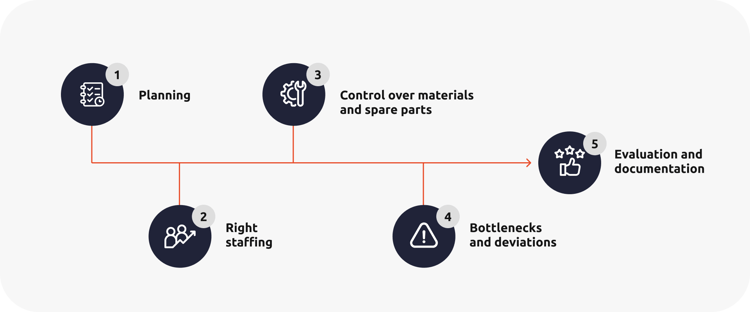
To minimize downtime you need a structured process that can be divided into five overall phases.
1. Early and detailed planning
Work starts long before the shutdown itself. A clear schedule makes it possible to identify exactly which machines need service. Work orders must be created, risk assessments carried out and time estimates made for each task. A digital maintenance system helps you gather all history in one place.
-
Identify and lock the scope at least 6 months before start.
-
Create a detailed schedule that highlights critical paths for all parties.
- Perform risk assessments for all planned work steps.
2. Right staffing
Proper staffing for a maintenance shutdown requires access to both internal staff and external contractors. Everyone involved needs clear responsibilities and the correct authorizations for specific tasks. Clear stop lists serve as an important basis to coordinate efforts, especially for external parties. Communication between shifts minimizes misunderstandings and keeps the schedule intact.
-
Book external contractors well in advance to secure access to specialist skills.
3. Control over materials and spare parts
Not having the right spare part when a machine is disassembled leads to costly delays. Inventory the stock in good time and order necessary components with a healthy margin. Link material requirements directly to specific work orders in the system to create a clear overview of consumption and simplify procurement.
-
Ensure all spare parts are available and correctly labeled in the warehouse.
4. Managing bottlenecks and deviations
Even with careful planning, unforeseen problems often arise when equipment is taken apart. A predefined routine helps you handle delays and bottlenecks methodically. Supervisors should have the mandate to quickly reallocate resources or reprioritize tasks based on the critical line in the schedule. A planned time buffer for complex tasks prevents isolated deviations from jeopardizing the overall restart. Mandatory quality checks after each subtask also reduce the risk of setbacks later in the process.
-
Establish a clear structure for daily coordination meetings during the shutdown.
5. Evaluation and documentation after completion
Once production is running again, the work of analysing results begins. Document what worked well and which tasks took longer than estimated. This data helps the next maintenance intervention run more smoothly. Reporting back into your maintenance system ensures all data is saved and searchable for future analysis.
-
Complete all reporting and document lessons learned immediately after restart.
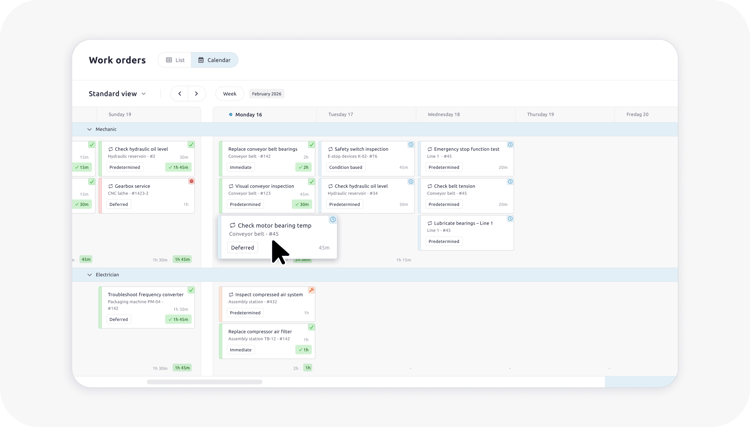
System support simplifies the whole process
A modern maintenance system (CMMS) gathers the facility’s entire structure on a single platform. Digital checklists reduce paperwork and give technicians access to drawings and manuals directly on their mobile devices. Historical data from past interventions makes it easier to plan upcoming needs and anticipate resource requirements.
Try for Free
Want to Try Mainter?