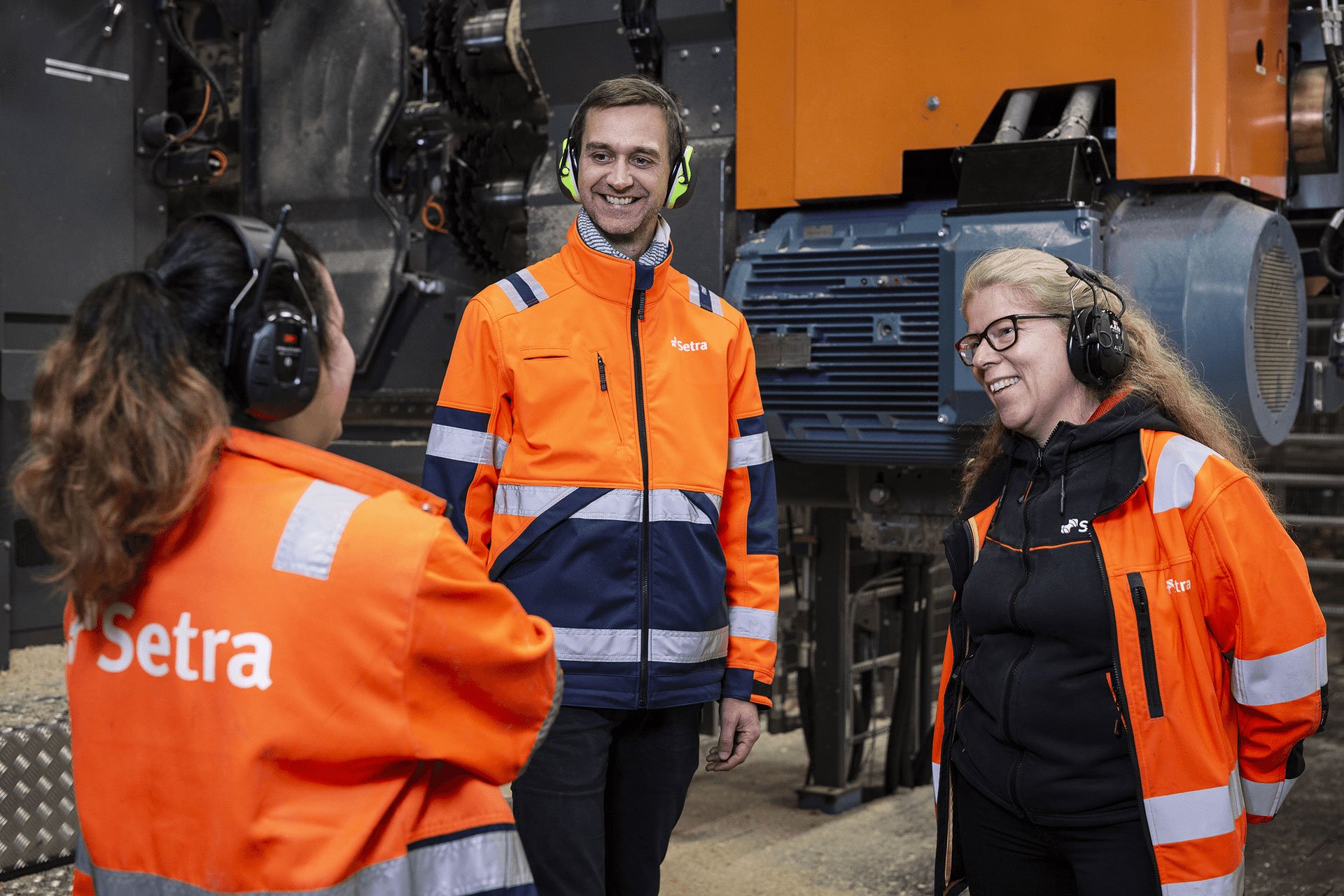
New maintenance processes required unified ways of working – starting with a new maintenance system
With seven sawmills spread across Sweden, Setra needed a solution that could link their maintenance processes and create a unified, sustainable strategy. Choosing the right system was a crucial decision with a major impact on both day-to-day operations and the long-term goal of creating value. Follow along and discover how the right maintenance system became the starting point in Setra's journey towards improved efficiency and operational reliability.
Setra is one of Sweden's leading wood industry companies and has built their business on a strong foundation of sustainability and innovation. Through their broad product range – from structural timber to advanced glulam products – Setra is helping to drive development towards more environmentally friendly and circular construction.
Jonas Gustavsson is Production Director for all Setra's sawmills and leads a team of site managers. He describes his role in linking maintenance work with strategic interests:
– My focus is on improving the performance of the sawmills and being the link with our stakeholders, such as raw material suppliers and the sales channel. By harmonizing working practices across the mills, we aim to ensure long-term reliability and maximum availability.
One of the site managers in Jonas' team is Patrik Hedqvist at Heby, one of Setra's largest sawmills. Patrik is responsible for around 90 employees and, with a large production volume, his role is crucial in creating smooth and efficient operations.
– My job is to ensure that we follow our maintenance procedures and standards at Heby sawmill. It's about making sure that working methods and processes are in place and complied with, Patrik explains.
A necessary change
Before introducing Mainter as their maintenance system, Setra faced several challenges in creating uniform and efficient maintenance. Jonas describes the situation:
– Our previous maintenance system was outdated and we had to find a new one that better matched our needs. As maintenance is a critical part of Setra's strategy, it was crucial to have a system that could balance the need without being too costly or extensive.
Mainter was chosen partly because of its user-friendliness and partly because of its ability to easily transfer data from Setra's previous systems. Patrik also points out that other systems he has seen can be overwhelming because of their complexity.
– Mainter is modern, user-friendly and easy to integrate into our business. Seeing everyone, from the youngest to the oldest, using the system within a couple of weeks was impressive, Patrik says and continues:
– Despite its simplicity, Mainter gives us all the features we needed. It's also a cloud-based system with a reasonable price tag, which is also configurable to the needs of our particular industry.
Structured implementation for lasting change
The implementation of Mainter took place step by step and was adjusted along the way to meet the needs of Setra's various sawmills.
– The first phase consisted of start-up meetings at each plant to set expectations, create schedules and set goals, explains Production Director Jonas Gustavsson.
He also says that the work was about more than just changing systems:
– It was a journey of change where we focused on improving our ways of working and making them consistent. We wanted to have pillars to stand on and a common language across the board – with Mainter as the base.
This approach has created a culture where everyone has greater responsibility and understanding of the maintenance processes. Site manager Patrik highlights the commitment of maintenance staff as a crucial factor:
– There has to be a willingness to embrace the system on the sites, otherwise it won't work.
The right training for the right role
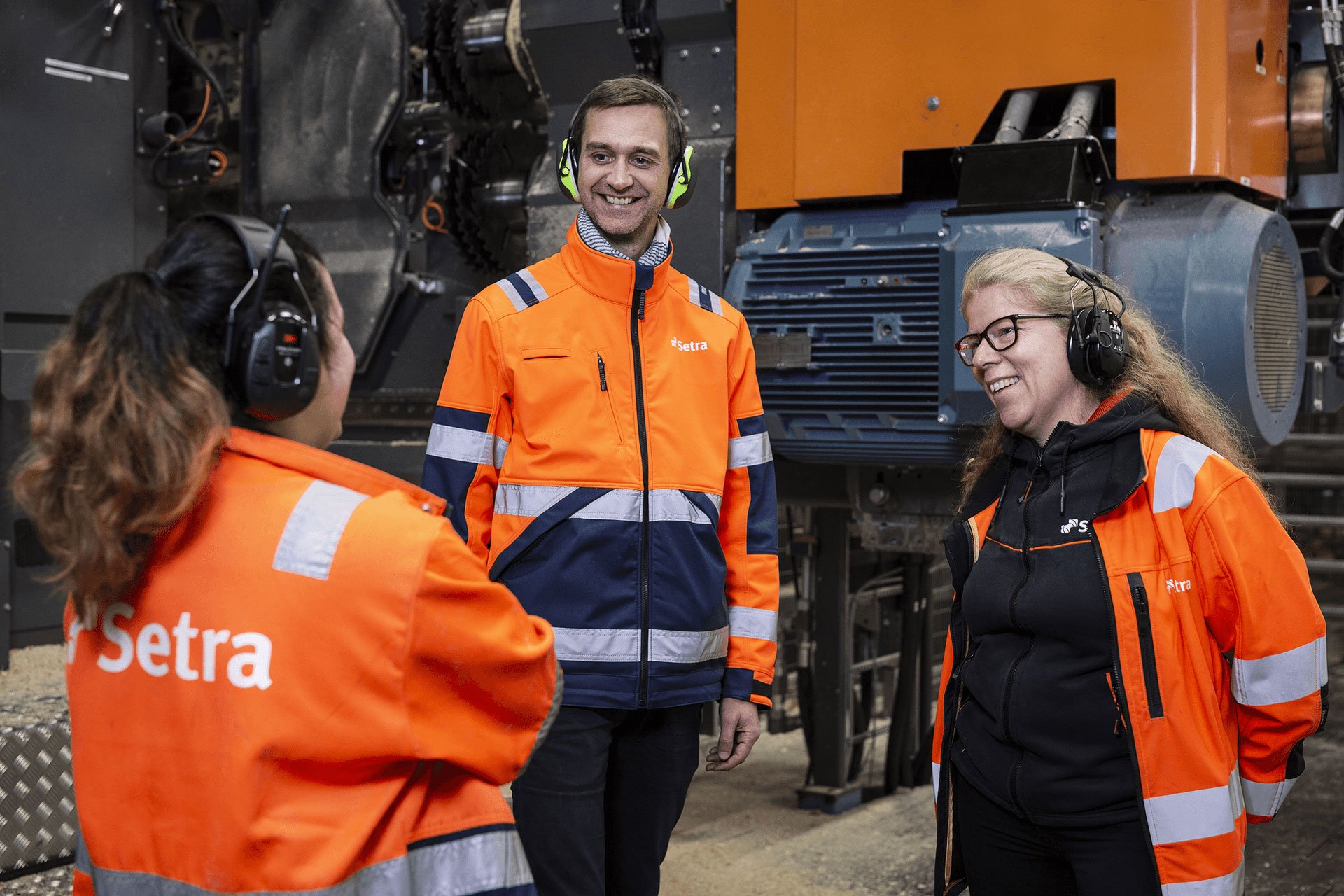
The next step in the implementation was to train the staff. Setra customized the training for different staff groups, ranging from short 30–45 minute introductions for operators to workshops of up to ten hours for maintenance managers, maintenance planners and coordinators.
– When we rolled out the system to the operators, only a short effort was required, which showed that Mainter is easy to use from their side. However, we put special emphasis on the training of night staff and administrators of the system to ensure that the ways of working were deeply rooted, says Jonas.
The step-by-step implementation made it possible to avoid production disruptions and ensure that the way of working continued even when key people were replaced. Jonas continues:
– We have made great progress, but the implementation is an ongoing project where we continue to maintain and develop our procedures to avoid falling back into old patterns.
Responsibility, efficiency and a culture of ownership
Implementing Mainter has meant a radical change in working methods at Setra, resulting in a more structured maintenance process. Jonas explains that part of the change was the introduction of clear plant ownership:
– We have worked to ensure that the plant owner has responsibility for ensuring that maintenance is carried out in the best possible way on their unit, from requesting action to following up results. This has established a stronger culture of accountability and made our decision-making more efficient.
Mainter's system structure has also made it impossible to ignore work orders, resulting in fewer long benches and faster actions. Setra has seen major improvements in how maintenance work is prioritized and performed.
– Previously, work orders could end up in a bucket and lie around without anyone taking responsibility for them, but now someone has to make decisions, act and follow up on each order, says Patrik.

Regular pulse meetings for daily success
Another component they implemented is so-called 'pulse meetings', which are now held regularly at each unit.
– The maintenance team starts each day with a joint review of the day's tasks and priorities.
This is followed by a so-called plant pulse meeting.
– At the plant pulse meeting, the maintenance and production departments meet to review yesterday's efforts, make the necessary adjustments for tomorrow and discuss any obstacles, Jonas continues.
The pulse meetings have become a natural link for prioritizing and distributing work tasks over days and weekends. This has enabled Setra to create a structured routine in which maintenance needs and planning are discussed openly, which has made it easier to act quickly on problems and ensure that resources are used in the best way.
Increased availability and production
The new ways of working have also contributed to increased availability in production.
– Disruptions have decreased and availability is on the rise. This is a positive trend that is of course super important to us, says Patrik.
Mainter's functionality has also made it easier to follow up on operations and ensure that maintenance needs are taken care of in time.
– It's a direct improvement that has raised the level of ambition in how we plan and perform our maintenance, says Jonas.
Another valuable addition is Mainter's cost follow-up, which has enabled Setra to manage costs better. Patrik describes how they are now discussed naturally in the daily work and how planning is adapted to optimize expenditure:
– We have started talking about costs in a different way. It has also made it easier to see stock balances and delivery times directly in the system, something we previously did by hand, he says.
The prerequisite for structure and efficiency
For Setra, Mainter's simplicity and structural focus have been key to creating a sustainable and efficient maintenance process.
– What really sets Mainter apart is its simplicity – it's easy to build a structure in the system that reflects our reality. The basic functions, such as posting a spare part or creating a work order, are smooth and do not require advanced system knowledge, explains Jonas.
The Mainter planning calendar is particularly important for working efficiently and keeping a clear overview of all work orders in a visual and structured way – which was previously difficult to achieve.
– Our previous system didn't provide the same overview, which meant that work tasks could sometimes fall through the cracks or become protracted. Now we can handle up to 30 work orders per day with a clear overview, says Patrik.
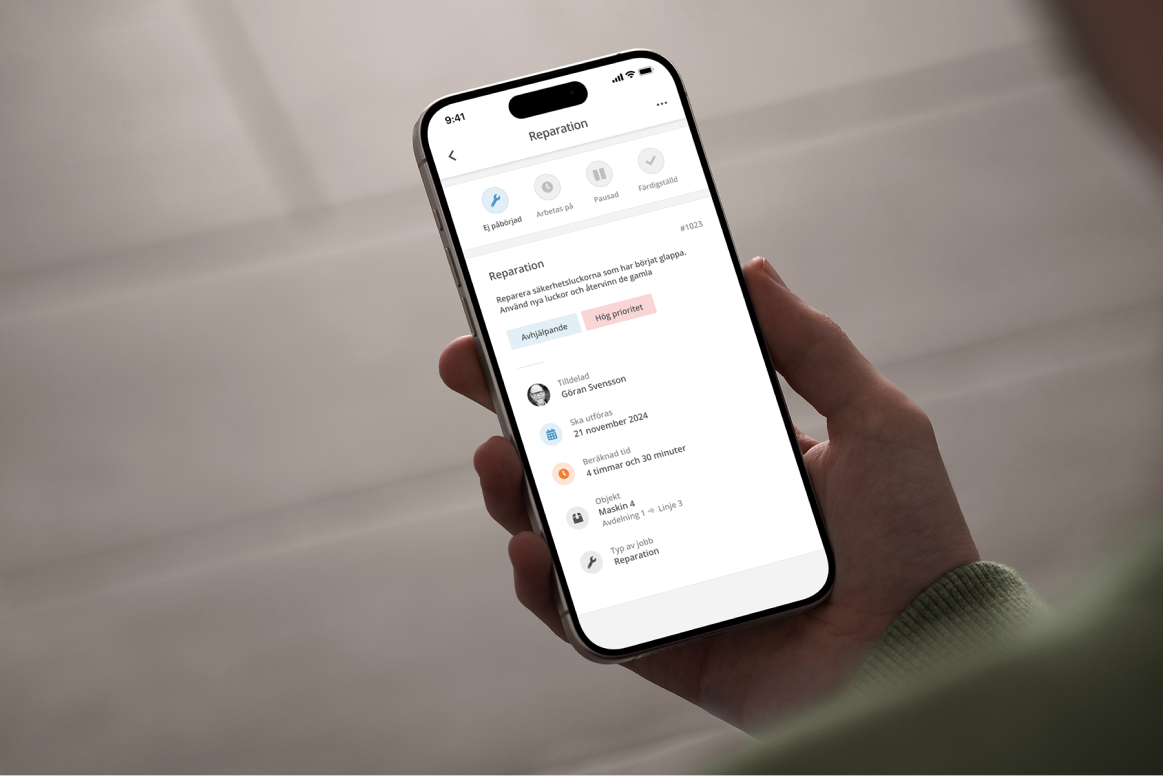
The mobile app that takes maintenance to your pocket
Mainter's mobile app has also simplified daily work at Setra. On Setra's large industrial estates, which can cover up to 45 hectares, this has meant concrete time savings.
– Having everything in your pocket has made the reporting of deviations smoother and more efficient. Our operators can easily register faults directly from their phones, which minimizes the need for manual inspections on site, explains Jonas.
For Setra, Mainter has thus become a tool that not only supports their daily needs but also enables further development in digital maintenance management.
– The system is really a prerequisite for us to be able to keep up with developments and work as efficiently and structured as possible in the future, says Jonas.
A partnership that drives support and development
The collaboration between Setra and Mainter has been characterized by strong support and continuous development.
– Everything has worked very well and strengthened our conviction that we made the right choice. Mainter constantly shows its value to us. The support we received from Mainter was just what we needed to make the change, says Jonas.
One element of the collaboration has been the opportunity for continuous improvement and a responsive dialog with Mainter's support team.
– We can always suggest improvements, and they listen. That support process makes everything easier, explains Jonas.
Mainter's flexibility is also evident in the integration with supplier HewSaw, where their system generates preventive maintenance, but which is uploaded to Mainter on a daily basis:
– Instead of managing two systems, we got everything in one system - just as we wanted it, says Jonas, summing up:
– Mainter has not only given us a system, but also a tool that supports our operations and our development towards continued increased availability and efficiency.
Would you like to know more?
Setra's success with Mainter shows how the right maintenance system can increase efficiency, simplify everyday life and implement new ways of working.
Would you also like to see how Mainter can optimize your maintenance processes and strengthen your business? Book a free demo and see the possibilities for yourself.